
Progressive Overload: The One Principle That Actually Guarantees Progress
If your workouts are not getting harder over time, your body has no reason to change. Here is how progressive overload works and the common mistakes that stall people.
The Simplest Rule in Strength Training
Progressive overload is not complicated. It means gradually increasing the demand you place on your muscles over time. Do a little more than last time. That is it.
Without it, your body adapts to the current stress and stops changing. Same weight, same reps, same result — week after week. If your exercise tracker shows identical numbers for a month, that is not consistency. That is a plateau.
More Ways to Overload Than Just Adding Weight
Most people think progressive overload means slapping more plates on the bar. That works, but it is only one option:
- Increase weight — the obvious one. Add 1 to 2.5kg when all your reps are clean
- Increase reps — did 8 last week? Try for 9 or 10 with the same weight
- Add a set — go from 3 sets to 4 once you handle the current volume comfortably
- Improve range of motion — deeper squats, fuller bench press range
- Reduce rest time — same work in less time increases metabolic stress
- Better technique — cleaner form recruits more muscle, even at the same weight
The Mistake That Stalls Most People
Trying to add weight every single session. This works for the first few weeks (the "beginner gains" period everyone talks about), but it quickly leads to form breakdown, joint stress, and frustration when you inevitably miss a lift.
A more realistic approach:
- Progress every one to two weeks, not every session
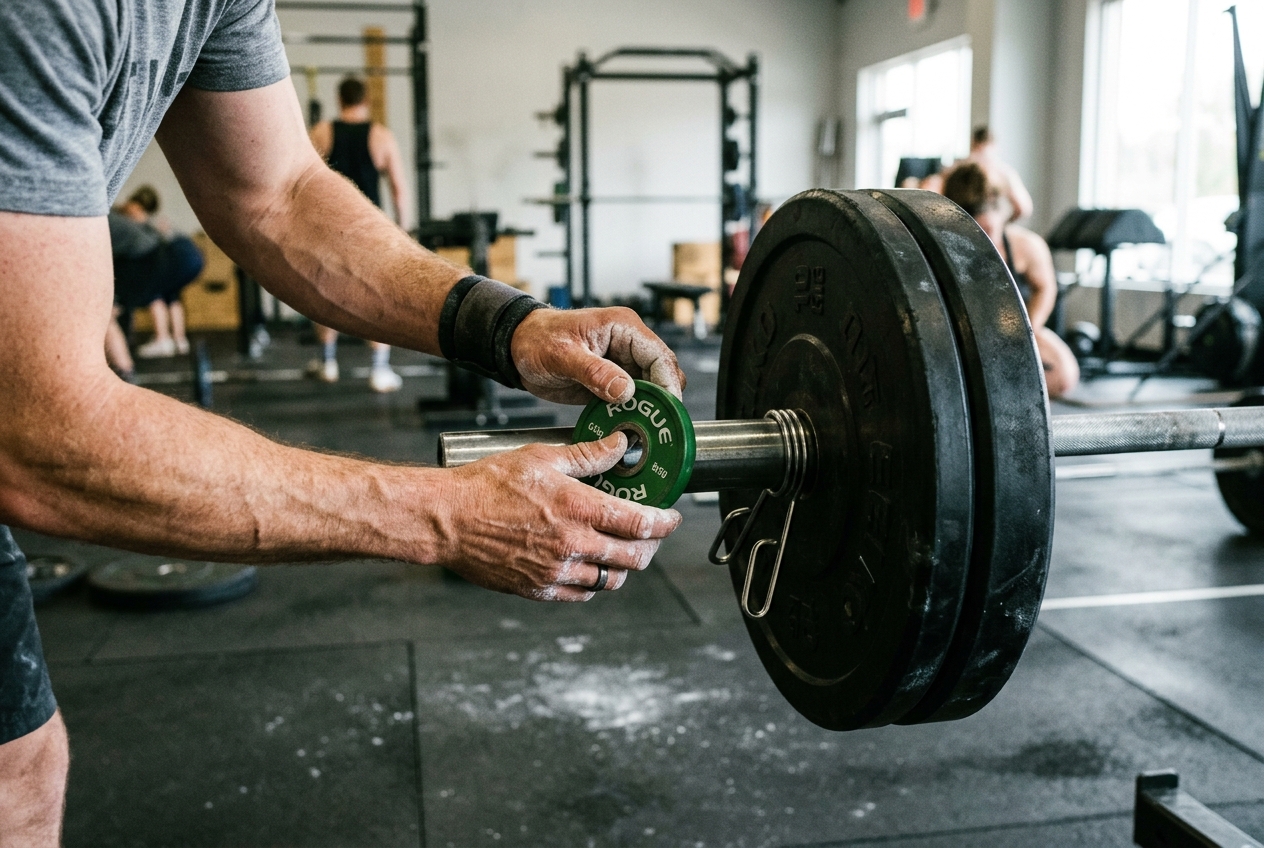
- Use micro-plates (0.5 to 1kg) for upper body lifts — small jumps add up fast
- Accept that some weeks you will maintain, not progress. That is normal and fine.
How BODYMAX Tracks This for You
BODYMAX logs every set, rep, and RPE value across your training history. The workout tracker app detects when you are ready for a bump based on real data:
- Consistent completion — you are finishing all planned sets without issues
- Declining RPE — the same weight is feeling easier over time
- Adequate recovery — your volume tolerance supports the increase
You do not have to decide when to add weight. The personal trainer app recommends it when the numbers say you are ready.
Plateaus Are Normal — Do Not Panic
Everyone hits them. When progress stalls:
- Check recovery first — sleeping enough? Eating enough protein?
- Vary the stimulus — try a different rep range or exercise variation
- Deload for a week — reduce volume by 30 to 40 percent, then resume
- Be patient — a one or two week plateau is not a crisis
The Long View
Progressive overload is not about smashing personal records every week. It is about doing slightly more than last time, consistently, over months and years.
A 1kg increase per month on your bench press does not sound exciting. But that is 12kg in a year. Over two years, that is a transformation. Small, boring increments add up to remarkable progress — and a decent gym app should help you see that trajectory, not just today's numbers.
BODYMAX Team
Written by the team behind BODYMAX.fit — coaches, programmers, and training nerds building smarter tools for real-world strength training.