Starting Strength Training: A Straight-Talking Beginner Guide
New to the gym and not sure where to start? This is everything you need to know about beginning strength training — choosing exercises, building habits, and avoiding the mistakes everyone makes.
The Biggest Mistake Everyone Makes
Nearly every beginner does the same thing: they find an advanced six-day programme on the internet, go all-out for two weeks, and then disappear from the gym for three months. Sound familiar?
The thing nobody tells you is that consistency beats intensity. Starting with three days a week and actually showing up every week will get you further in six months than any aggressive programme you burn out on.
How Many Days Should You Actually Train?
Three days a week. Seriously, that is enough to build real strength as a beginner. Your body needs time to recover between sessions — that is when muscles actually grow and get stronger.
A simple split that works:
- Day 1 — Upper body (pushing and pulling movements)
- Day 2 — Lower body (squats, lunges, hip hinges)
- Day 3 — Full body (a mix of everything)
Give it four to eight weeks. Once you are handling that comfortably, consider adding a fourth day. No rush.
Which Exercises to Focus On
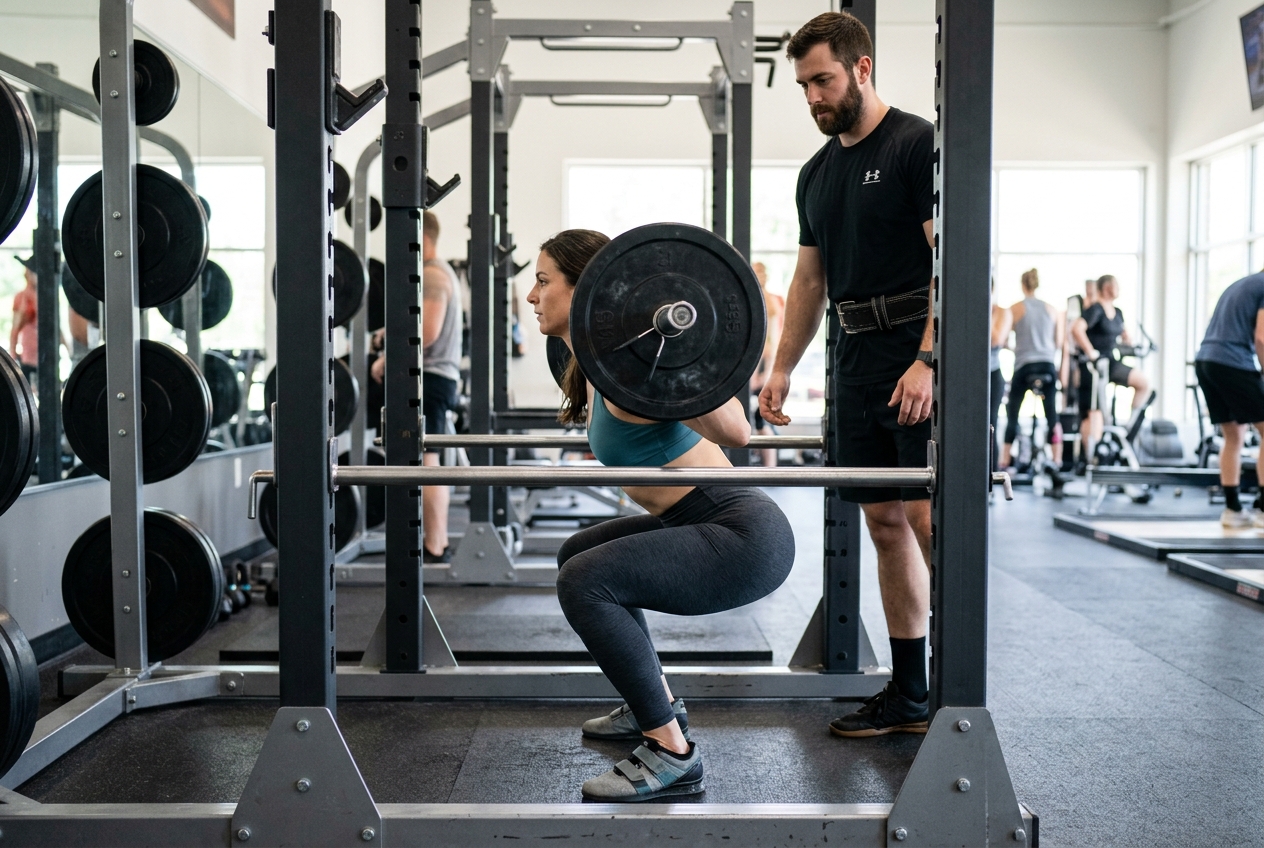
Compound movements — exercises that work multiple muscle groups at once. These give you the most progress per rep and teach your body to move properly under load.
The essentials for any beginner gym routine:
- Squat variations — goblet squats, bodyweight squats, or leg press
- Hinge movements — Romanian deadlifts, hip thrusts
- Pushing — push-ups, dumbbell bench press, overhead press
- Pulling — lat pulldown, dumbbell rows, cable rows
- Core work — planks, dead bugs, Pallof press
You do not need fifteen different exercises per session. Five to six compound movements is plenty.
Sets, Reps, and Rest
Start with 3 sets of 8 to 12 reps per exercise. Use a weight that feels challenging by the last few reps but still allows good form. If you cruise through all 12 reps easily, bump the weight up a little next time.
Rest 60 to 90 seconds between sets for smaller exercises, and 2 to 3 minutes for heavier compound lifts. Rest is not wasted time — it is recovery that lets your next set be productive.
Progression Without Overthinking It
Progressive overload simply means doing a bit more over time. That could be adding a small amount of weight, doing one extra rep, or completing an additional set. The key word is gradual.
BODYMAX handles this automatically. The workout tracker app monitors your performance across sessions and suggests increases when you are ready. You do not need to plan it yourself — just train, log your sets, and let the system do the maths.
Common Fears (That Are Not Worth Worrying About)
"I will get too bulky." Building significant muscle takes years of hard work and specific nutrition. You will feel stronger and look more toned long before "bulky" becomes a concern.
"I do not know what I am doing." Nobody does at first. Focus on a few key movements, use the video demos in your fitness app (BODYMAX has over 2,200), and start lighter than you think you need to.
"People at the gym will judge me." They really will not. Most gym-goers are focused on their own workout and barely notice what anyone else is doing.
Just Start
Start simple. Three days a week. Compound movements. Progress gradually. Be patient with yourself. Six months of consistency will surprise you more than six weeks of intensity ever could.
BODYMAX Team
Written by the team behind BODYMAX.fit — coaches, programmers, and training nerds building smarter tools for real-world strength training.